
Table of Contents
Responsible Travel: How To Explore The World Without Harming It
Travel opens our eyes and hearts. We see new cultures, taste new foods, and meet people who change how we think. But each journey also leaves a mark on the planet and its people. Responsible travel is about exploring with care—making choices that protect the places we visit and respect those who live there.
Today, travelers have more power than ever to help communities, preserve nature, and build a better future. But it takes knowledge, intention, and small actions that add up. This guide shows you how to travel responsibly, using clear examples, practical tips, and real data to help you make a difference.
What Is Responsible Travel?
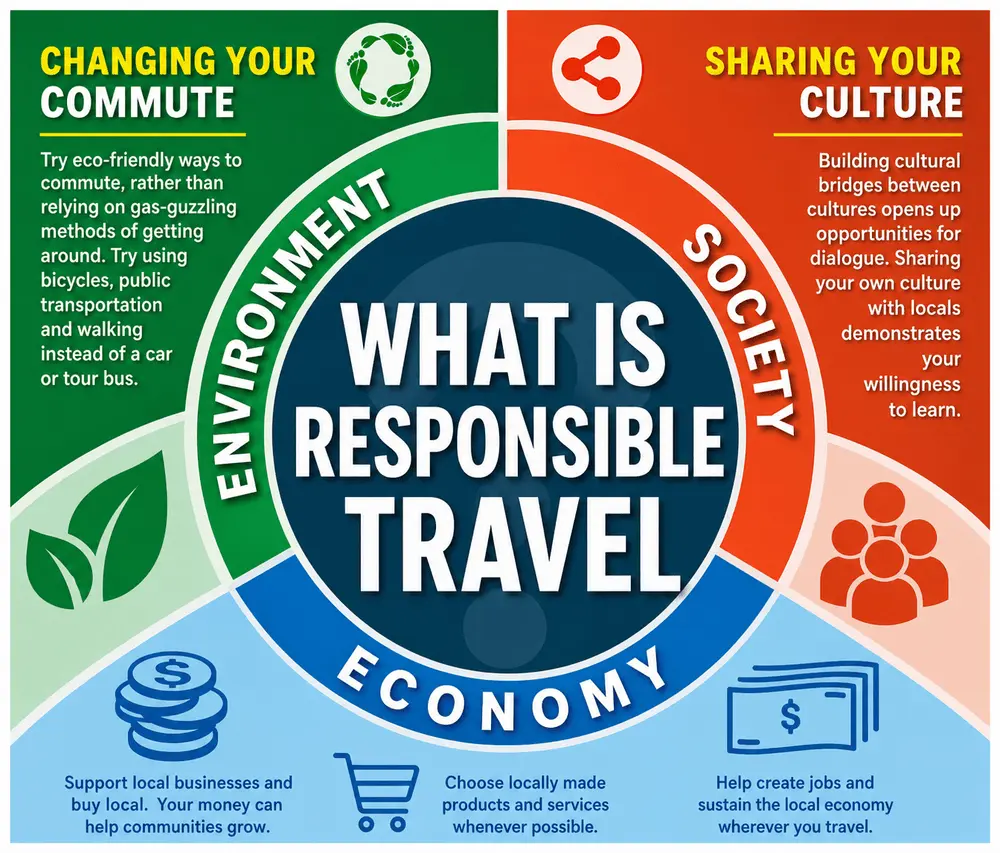
Responsible travel means making conscious decisions during your trip to reduce negative impacts and increase positive ones. It goes beyond not littering or saving water; it’s about respecting local cultures, supporting communities, and protecting the environment. Responsible travelers consider how their actions affect everything from wildlife to local businesses.
Many people confuse responsible travel with sustainable travel. Sustainable travel focuses mainly on environmental protection, while responsible travel includes social and cultural respect as well. For example, responsible travel includes learning about local customs, buying from small businesses, and avoiding activities that harm animals.
Why Responsible Travel Matters
The world is facing big challenges. Tourism brings benefits, but also problems like pollution, overcrowding, and loss of culture. According to the United Nations World Tourism Organization (UNWTO), tourism accounts for about 8% of global carbon emissions. In some cities, tourists outnumber locals, making daily life harder.
But responsible travel can help solve these problems:
- Protects nature: When travelers avoid damaging activities, they help preserve forests, oceans, and wildlife.
- Supports communities: Spending money locally helps families, schools, and health clinics.
- Keeps culture alive: Respecting traditions and learning about history makes communities proud and helps them continue their customs.
In short, responsible travel creates a cycle of respect and support, benefiting both visitors and locals.
Key Principles Of Responsible Travel
Responsible travel is simple to understand, but not always easy to practice. Here are the main principles:
1. Respect Local Cultures And Customs
Learn about the place you visit. Dress appropriately, follow local rules, and ask before taking photos of people.
2. Protect The Environment
Use less water and energy, avoid single-use plastics, and never disturb wildlife. Choose eco-friendly transportation and accommodations.
3. Support Local Economies
Buy from local markets, eat at family-run restaurants, and book tours with local guides. This ensures your money stays in the community.
4. Be Mindful Of Your Impact
Consider the size of your group, the timing of your trip, and the activities you choose. Avoid overcrowded places during peak season.
5. Learn And Share
Take time to learn about the area’s history, language, and challenges. Share your knowledge with others to inspire responsible travel.
How To Travel Responsibly: Practical Steps
Responsible travel starts before you even leave home. Here’s how you can make a difference at every stage:
1. Planning Your Trip
- Research local customs: Find out about traditions, dress codes, and religious practices.
- Choose ethical destinations: Some places have strong policies to protect nature and support communities.
- Pick eco-friendly transportation: Trains, buses, and shared rides often produce less carbon than flying.
2. Booking Accommodation
Hotels and guesthouses are not all equal. Look for places that:
- Use renewable energy or save water
- Employ local staff and buy local products
- Have certifications like Green Key or LEED

Here’s a quick comparison of hotel types:
| Hotel Type | Environmental Impact | Community Support |
|---|---|---|
| Large Chain Hotels | High (energy use, waste) | Low (profits leave area) |
| Eco-Lodges | Low (solar, recycling) | High (local employment) |
| Family Guesthouses | Medium (depends on owners) | High (direct local support) |
3. During Your Journey
- Travel light: The less you carry, the lower your carbon footprint.
- Avoid single-use plastics: Bring a reusable water bottle and shopping bag.
- Be kind to wildlife: Never feed or touch wild animals. Choose wildlife tours that follow ethical rules.
4. Food And Shopping Choices
Eating and shopping are big parts of travel. Make them count:
- Eat local: Try foods from small restaurants or markets. This supports farmers and cooks.
- Buy handmade: Look for crafts made by local artisans, not mass-produced souvenirs.
- Ask questions: Find out where products come from and how they’re made.
5. Interacting With Locals
Respect is key:
- Learn basic greetings in the local language.
- Ask before taking photos of people or their homes.
- Listen and observe—sometimes, silence is the best way to show respect.
6. Leaving No Trace
Always leave places better than you found them:
- Take your trash with you, even if bins are available.
- Stay on marked trails to avoid harming plants or animals.
- Do not take natural souvenirs like shells or rocks.
Common Mistakes In Responsible Travel
Even well-meaning travelers make mistakes. Here are a few to avoid:
- Over-tourism: Visiting places during peak times can harm local life and nature.
- Greenwashing: Some hotels claim to be eco-friendly but aren’t. Look for real certifications.
- Unethical animal tourism: Avoid riding elephants, taking photos with chained animals, or visiting places where animals are kept in poor conditions.
Many travelers forget that buying cheap souvenirs can hurt local artists. Mass-produced items often come from factories far away, not local hands. Always ask where things are made.
Responsible Travel In Action: Real Examples
Let’s look at how responsible travel works in real life:
Case Study: Costa Rica
Costa Rica is famous for eco-tourism. More than 25% of its land is protected. The country attracts travelers who want to see wildlife and rainforests. Hotels here use solar power, recycle water, and employ locals. In 2019, Costa Rica earned $4 billion from tourism, but still kept its nature safe.
Case Study: Bhutan
Bhutan limits tourist numbers and charges a daily fee. This keeps crowds small and helps the country use tourism money for schools and clinics. Visitors must follow strict rules, like no littering or disrespecting local customs. Bhutan’s model shows that less can be more.
Case Study: Local Markets In Morocco
In Morocco, buying from souks (markets) supports families and helps preserve traditions. Tourists who bargain fairly and buy handmade goods help keep crafts alive. But buying from big stores means profits leave the country.
Responsible Travel Statistics
Numbers help us understand the impact:
- 8% of global carbon emissions come from tourism (UNWTO)
- Over 1.4 billion people traveled internationally in 2018
- 60% of travelers say they want to travel more responsibly (Booking.com, 2021)
- Eco-tourism is growing 20% faster than traditional tourism (World Travel & Tourism Council)
These stats show that responsible travel is not just a trend—it’s a necessity.
Choosing Responsible Travel Activities
Not all activities are equal. Here’s a comparison of popular options:
| Activity | Environmental Impact | Social Impact |
|---|---|---|
| Wildlife Safari (ethical) | Low (guided, no contact) | High (supports local guides) |
| Jet Skiing | High (fuel, noise) | Low (few local jobs) |
| Cooking Class with Locals | Low (home setting) | High (shares culture) |
| Large Theme Park | High (energy, water) | Medium (jobs, but profits leave) |
Choose activities that respect nature and involve locals. This brings deeper experiences and helps communities.
How To Find Responsible Travel Companies
It’s not always easy to tell which companies are truly responsible. Here are signs to look for:
- Certifications: Look for logos like Travelife, Green Key, or Rainforest Alliance.
- Transparent practices: Companies explain how they help the environment or community.
- Local staff: Guides and employees are from the area.
- Fair pricing: Money goes to workers, not just owners.

Many companies now publish annual reports showing their impact. Read these to check if their actions match their words.
Responsible Travel For Families
Traveling with kids is a chance to teach values. Here are tips for families:
- Choose child-friendly eco-lodges: Many have educational programs about nature.
- Involve children: Let them help plan, pack, and learn about local customs.
- Avoid animal entertainment: Teach kids why animal shows can be harmful.
- Use public transport: Children learn about different ways to travel and meet locals.
Responsible travel makes family trips more meaningful. Kids remember kindness, not just attractions.
Technology And Responsible Travel
Modern technology helps travelers make better choices:
- Apps: Use apps to find eco-friendly hotels, public transport routes, and local events.
- Social media: Follow accounts that promote responsible travel and share your experiences.
- Online reviews: Check reviews for mentions of eco practices and community support.
But technology can also be a distraction. Spend time offline to connect with people and places.
Responsible Travel And Accessibility
Responsible travel includes making places welcoming for all. Some travelers have disabilities, so choosing hotels and tours with ramps, sign language guides, or audio tours is important. Ask about accessibility before booking.
Many popular destinations now offer wheelchair-friendly routes and sensory-friendly programs. Responsible travel should be open to everyone.
Responsible Travel And Volunteering
Volunteering can be a great way to help, but it needs to be done carefully:
- Short-term volunteering: Often less helpful than you think. It can disrupt local routines.
- Skill-based volunteering: Use your real skills—teaching, healthcare, building.
- Choose reputable organizations: Make sure your work benefits the community, not just the company.
Ask questions before volunteering: Who will benefit? Is the project sustainable? Avoid “voluntourism” that feels good but does little good.
Responsible Travel And Language Learning
Learning a few words in the local language makes a big difference. It shows respect and opens doors. Even basic greetings, thank you, and please can lead to smiles and better connections. Use language apps or phrasebooks to prepare.
Responsible Travel In The Age Of Climate Change
As climate change becomes more serious, travelers must adapt. Flying is one of the biggest sources of emissions. Consider these actions:
- Fly less: Use trains or buses when possible.
- Offset your carbon: Some airlines let you pay to support green projects.
- Support renewable energy: Choose hotels powered by solar or wind.
Here’s a comparison of transport emissions:
| Mode of Transport | CO₂ Emissions (per passenger/km) | Responsible Choice |
|---|---|---|
| Airplane | 0.18 kg | Low (only if necessary) |
| Train | 0.04 kg | High (eco-friendly) |
| Bus | 0.07 kg | Medium (better than flying) |
| Car (solo) | 0.14 kg | Low (carpool if possible) |
Choosing trains or buses can cut your carbon footprint by more than half.
Two Non-obvious Insights For Responsible Travelers
- Timing matters: Traveling during off-peak seasons not only avoids crowds but also supports local businesses when they need it most. Many shops and hotels rely on year-round income but struggle outside busy months.
- Digital impact: Sharing photos online can affect places in unexpected ways. When a destination goes viral, it may attract too many visitors, harming the area. Be mindful about tagging sensitive locations.
Responsible Travel Resources
For deeper learning, visit the UNWTO website for guides and reports on sustainable tourism. Responsible travel is a journey—not a single action. Keep learning, ask questions, and be curious.
For detailed research and global data, see UNWTO Sustainable Development.

Frequently Asked Questions
What Is Responsible Travel?
Responsible travel means making choices that reduce harm to nature and respect local people and cultures. It involves being aware of your impact and making decisions that help communities and the environment.
How Can I Tell If A Hotel Is Eco-friendly?
Look for certifications like Green Key or LEED. Read reviews for mentions of recycling, solar power, and local hiring. Ask the hotel about their practices before booking.
Is It Better To Travel During The Off-season?
Yes, traveling during off-peak months helps reduce overcrowding and supports local businesses when they need income. Prices are often lower, and your visit is more helpful.
Are Animal Attractions Responsible?
Many are not. Avoid places where animals are kept in poor conditions or used for entertainment. Choose wildlife tours led by ethical guides who follow strict rules.
How Can Technology Help With Responsible Travel?
Apps and websites can help you find eco-friendly hotels, ethical tours, and local businesses. Online reviews share experiences and highlight responsible practices.

—
Traveling responsibly is not about perfection. It’s about small, thoughtful actions that add up to big change. Whether you’re exploring a distant country or your own city, your choices matter. Responsible travel means leaving a place better than you found it and inspiring others to do the same.
With each journey, you become part of a global movement for good.